Perfecting Your Craft The Importance of Hair Cutting Skills
When it comes to a career as a professional hairdresser, cutting hair is the key….
When it comes to a career as a professional hairdresser, cutting hair is the key. Learning how to cut hair is how you style, create and work with your clients hair to achieve their required result. It is crucial to cut hair correctly as this will enhance your client’s appearance as well as provide them with a style which will be easy to maintain. Learning and practicing the basics of each technique will provide you with confidence, speed and ultimately creativity whether in the salon or working as a freelancer.
No matter how skilled you are at color or styling, you’re never going to be a truly excellent hairdresser without having mastered cutting skills.
Exploring Different Hair Textures
Type 1 (Straight)
Delivers smooth, flat results with sharp lines.
Does require layering to avoid flatness.
Blunt and sharp lines are easier to cut, but can be unflattering if not cut for your face shape.
Curly Hair
Gives natural volume and movement, perfect for layered cuts.
When cutting, natural waviness must be considered in order to avoid an irregular length.
A point cut or slide cut technique can give lots of texture with no volume.
Curly Hair: Hair that is curled or curved.
The hair needs to be sectioned carefully as otherwise you can create volume in the wrong places or shrinkage.
Also, cutting dry is an excellent way to gauge how much your curls will fall out and the overall silhouette you will end up with.
But remember: layering and texture are essential to keep the shape defined.
Another important consideration is the distinction between thick and fine hair. While the term “thick” is often used loosely to describe hair that is coarse or dense, it technically refers specifically to the width of an individual hair strand. On the other hand, “fine” describes hair that has a smaller diameter.
Heavy hair may require thinning to remove excess weight.
Those with fine hair need layers or texturizing to create volume and texture.
Knowing the density of the hair is important because it will indicate how much tension should be used as well as the correct cutting angle.
The Bare Basics for Cutting Hair Shears and scissors
This is because professional shears will give you a sharp, clean cut.
Utilize different kinds for chopping, layering or texturizing.
Razors
Great for producing soft, feathery edges.
Demand control and technique to prevent ridges or areas that are too thin.
Clippers
Ideal for cutting, fading and trimming.
Important for men’s cutting and creating strong, defined edges.
Sectioning Clips and Combs
Keep the hair clean and controlled to achieve uniform outcomes.
This will help with evenness and guide placement.
The Basics of Hair Cutting
Blunt
Cuts hair straight across for a clean, sharp look.
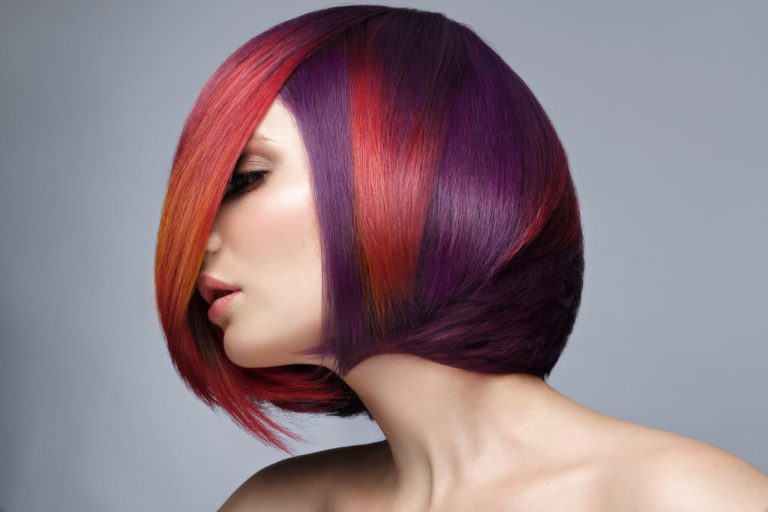
Great for bob haircuts, single length haircuts and clean lining.
Needs tension and accuracy to maintain consistency throughout the work.
Layering
Adds motion, depth, and dimension.
Can be horizontal, vertical, or diagonal based on preference.
Prevents the hair from going flat especially for fine or straight hair.
Point cutting:
This technique utilizes the tips of scissors to produce a softer, more textured cut.
A great tool for softening a blunt line and also helping with movement.
Commonly used on ends of layered cuts for a more finished look.
Slide Cutting
A method that involves sliding the blades of the scissors down the length of the hair to cut away weight.
Provides a nice length transition.
This is typically used in layered and graduated cuts to keep it fluid and smooth.
Texturizing
Provides weight reduction with no loss of length.
This can be achieved with shears, razors, or thinning scissors.
MUST HAVE for thick or heavy hair for better manageability!
Face Shape Cuts Oval
The most versatile, can be tried in different lengths and styles.
This style works with either blunt or multi-layered cut.
Round Face.
Instead, aim to lengthen the face by using layered, angular cuts.
Steer clear of too-short or blunt cuts that make you look wider.
The Squarish Face
Round out your squareness with a multi-layered or textured cut.
Side-swept bangs and subtle layers enhance existing texture.
The Heart-Shaped Face:
Offset a broader forehead with width at the jawline.
Layered ends and fringe can also aid the balance.
Long Face
Proportion is achieved by adding width and volume.
Steer clear of too-long, blunt cuts that lack layers or texture.
Workflow and Sectioning
Sectioning for Precision
Split your hair into sections so you can cut it evenly.
I do use clips to control and keep things even.
Sectioning correctly ensures correct angulation and uniform layering.
-keeping up the tension.
Tension also influences the resulting cut shape and its quality.
Tension may need to be adjusted according to hair type, texture and style.
Even tension prevents irregularity of length and gives uniformity of results.